 Today novelist Pamela Rafael Berkman shares a post with us at People Who Make Books Happen. Her essay Censored Shakespeare first appeared on her website at pamelarafaelberkman.com on July 24, 2017.
Censored Shakespeare
By Pamela Rafael Berkmam
Public Theater’s production of Shakespeare’s Julius Caesar has finished its run in New York’s Central Park, despite the withdrawal of support by some sponsors and the disruptions on June 16 and June 18.
Within seconds of the first stage rush, institutions and individuals worldwide raced to defend Shakespeare. My favorite hashtag, #ShakespeareSunday, was all a-Twitter. But during his lifetime Shakespeare would have had no one to so staunchly defend his right to free speech.
Censorship was a fact of life for him and all of his fellow Tudor writers. Not market-based shutting up, like getting a book contract cancelled, but real, true, hard government censorship, the defiance of which carried penalties like imprisonment in seriously horrible places, getting a hand cut off in the public marketplace, and grisly forms of execution.
Shakespeare’s colleague Ben Jonson spent several months in the Marshalsea political prison for co-writing a play called The Isle of Dogs (we’ll never know why – it’s lost). And the only example we have of Shakespeare’s handwriting (we think) are some notes on a play by someone else that he was script-doctoring, with several other playwrights, to make it more palatable to official censor Edmund Tilney, Master of Revels.
Tilney’s job included reviewing every play to be performed in the London-area playhouses. The play was The Book of Sir Thomas More, and the scene in question depicted a mob rioting (some would say protesting) in London.
In the end Shakespeare and his co-writers couldn’t revise the scene enough for Tilney’s approval. Tilney ordered that any representation of the riots be described in narration instead of shown on stage, adding ominously, “not otherwise at your own perils.”
The most well known example of Shakespeare and his friends being placed directly in danger by his writing involved the play Richard II, which contains the “deposition scene” in which Richard is stripped of his crown. Conspirators in the Earl of Essex’s doomed 1601 rebellion paid Shakespeare’s company, the Chamberlain’s Men, to perform it publicly the day before they tried to wrest the throne from Elizabeth I. Company member Augustine Phillips’ later testimony is priceless.

The Chamberlain’s Men, Phillips said, told the Essex rebels that the play “was so old and so long out of use as that they should get no company at it.” They had, he said, heartily wished to put on “some other play.” They only did it because Essex’s men offered them 40 shillings over the going rate.
The company was cleared of any deliberate wrongdoing, but they must have been terrified.
In Elizabethan England the ideas in our First Amendment were unheard of, undreamed of: Congress shall make no law respecting an establishment of religion, or prohibiting the free exercise thereof; or abridging the freedom of speech, or of the press; or the right of the people peaceably to assemble, and to petition the Government for a redress of grievances.
Considering what Shakespeare managed to leave us even working under the government restrictions placed on him, imagine what he might have done had he enjoyed the protections of the First Amendment. And today, worldwide, what genius is silenced, never to be heard or remembered, because he or she does not?
Note: For more details on the events I’ve mentioned here, try Park Honan’s Shakespeare: A Life, Oxford University Press, 1998.


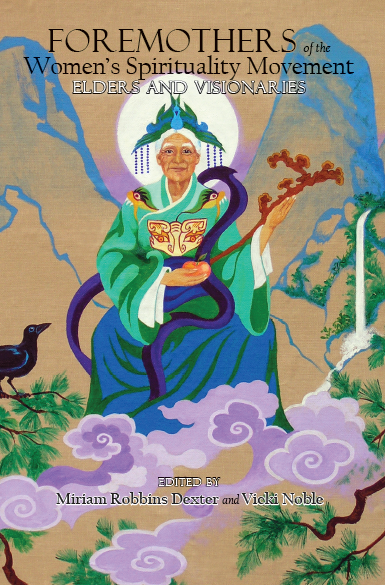
 Your unconscious is packed with ideas, metaphors, visions, plots, dreams, colors, characters, emotions—in short, everything you need to write a great novel or collection of poems. But how do you get to it? How do you step out of the social agreement we call “reality,” and dip into this incredibly rich resource?
  Today I’m talking to
 Brenda: WNBA is broad-based, non-profit organization with individual chapters in twelve cities plus individual members scattered across the country. There are numerous corporate Sustaining Members plus Honorary Members drawn from the world of books and beyond. We give out three distinguished National Awards every year and sponsor major literary events in our chapter cities and elsewhere such as the WNBA National Reading Group Month event that is coming up on October 8 as part of San Francisco Litquake.
 Mary: Now let’s talk about “
 Like all visionary fiction, Women’s Visionary Fiction gives us visions, magic, prophecy, spiritual experiences, the ability to see the future, to walk through the past, to hear the dead speak, and see other worlds that exist behind the thin veil that separates us from them. But Women’s Visionary Fiction gives us something more. That something, simply stated, is women. Women write this fiction. In it, all the world, visible and invisible, mystical and real, is seen through female eyes.
 Mary: Welcome to
 Mary: Your new novel
  For me, The Fifth Sacred Thing came directly out of the research I had been doing on the period you yourself write about in your